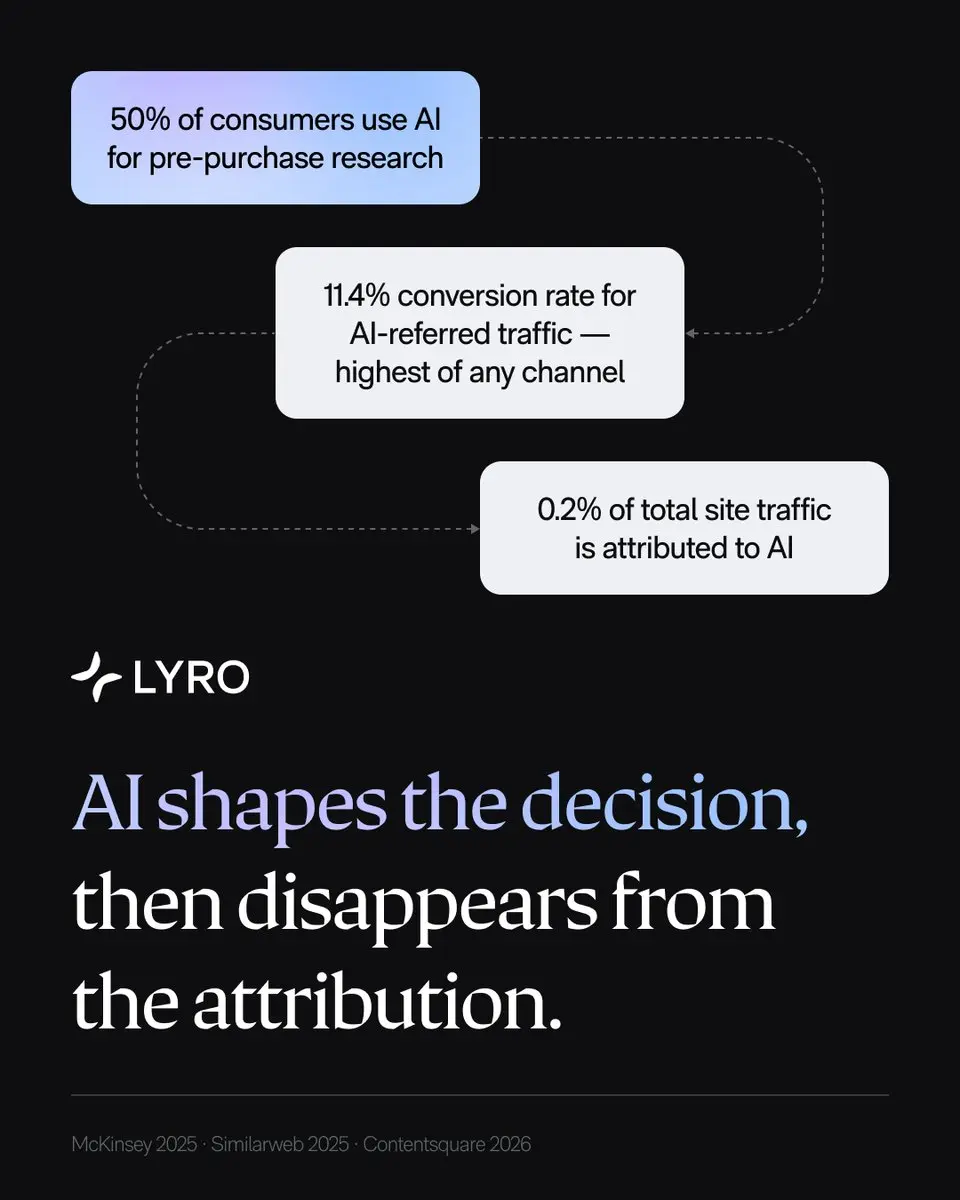
A new research report from Tidio, an AI-powered customer service platform, reveals a stark disconnect between the influence of artificial intelligence on consumer purchasing decisions and the credit it receives in web traffic attribution. According to the report, while McKinsey reports that half of consumers now rely on AI as their primary source for product research, Contentsquare's analysis of retail web traffic shows that AI-referred sessions account for only 0.2% of total visits. Tidio's report dubs this discrepancy the 'dark AI' gap, highlighting that AI shapes purchase decisions at a scale current attribution models cannot capture.
The findings underscore a growing challenge for e-commerce businesses: traditional analytics tools are failing to measure the true impact of AI on consumer behavior. Similarweb data in the report shows that ChatGPT-referred U.S. retail sessions convert at 11.4%, the highest of any measured channel. This suggests that tagged AI referrals represent high-intent traffic from a much larger pool of AI-influenced journeys that go uncredited. As AI becomes more embedded in product research, the gap between influence and attribution is expected to widen.
The report also cites projections from McKinsey that $750 billion in U.S. revenue will flow through AI-powered search by 2028, with brands that fail to prepare risking 20–50% of traditional search traffic. Morgan Stanley estimates that AI agents will influence $190–$385 billion in U.S. e-commerce spending by 2030. These figures emphasize the urgency for businesses to invest in AI-ready infrastructure and analytics that can accurately track AI's role in the customer journey.
Tidio's report, available at https://www.tidio.com, includes actionable insights for brands looking to bridge the attribution gap. The company's AI agent, Lyro, is designed to help e-commerce businesses automate customer service and drive sales. For more information on Lyro, visit https://www.getlyro.ai.