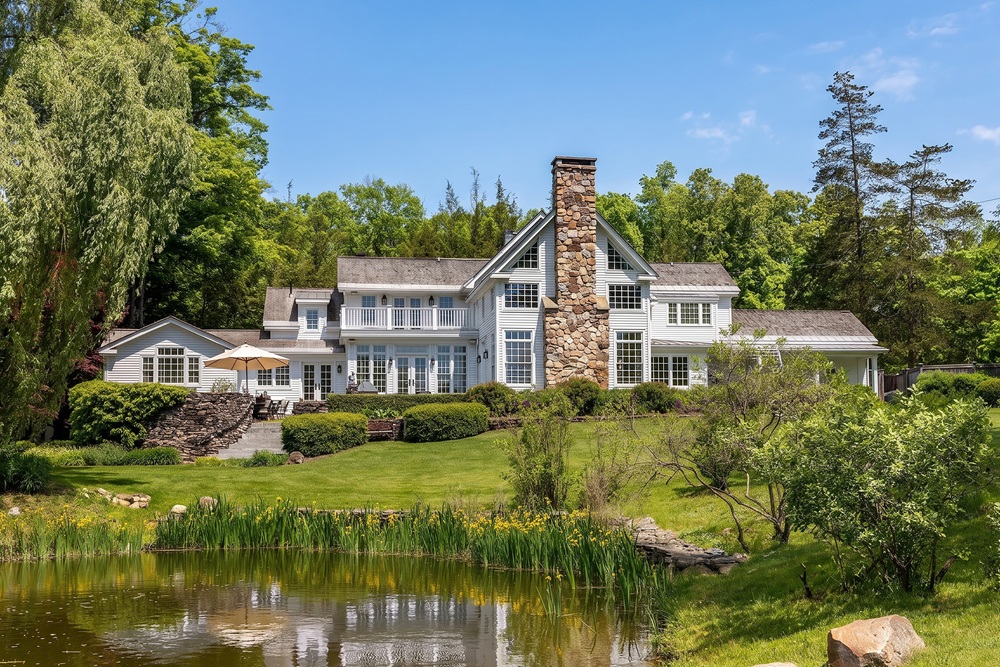
The Litchfield Hills, Hudson Valley, and Southern Berkshires have long attracted buyers seeking a weekend retreat. Yet, a growing number of these buyers are discovering that the region's appeal extends far beyond summer escapes, leading them to make it their permanent home. This shift is reshaping the local real estate market and underscoring the area's unique ability to convert transient visitors into lifelong residents.
Elyse Harney Morris, principal broker and owner at Elyse Harney Real Estate, has observed this trend across her three-state firm. “They stay for a year,” she says, “and then one of them starts commuting a few days a week, and then the whole thing just stops, and they go: we’re staying.” This pattern, repeated across the region, highlights a deeper truth: the area offers a quality of life that makes the city feel less like an anchor and more like a temporary stop.
What drives this permanence? First, the region delivers across all four seasons. Winter is anchored by Catamount Mountain Resort, which recently invested in a new lodge, expanded trails, and improved snowmaking. The resort's proximity and upgrades make year-round living attractive for families. Additionally, the area hosts ski jumping events and will welcome the Junior Olympics for the second time, drawing national attention. Summer brings Tanglewood in Lenox, Massachusetts, where the Boston Symphony Orchestra performs, and James Taylor's concerts have become a staple. The Appalachian Trail and a growing network of land trust properties and electric bike trails offer outdoor activities that sustain engagement year after year.
Beyond recreation, the region's cultural calendar runs deep. The Yale School of Music's summer programs in Norfolk, Connecticut, are open to the public, and prep schools host lectures and performances that draw audiences from afar. The Millbrook Winery in the Hudson Valley hosts weekend music and farm dinners, creating a rhythm of life that feels intentional and enriching.
The community infrastructure is equally vital. Town centers like Salisbury offer walkable access to Lakeville Lake, restaurants, and year-round institutions. The prep school network, including Hotchkiss, Salisbury School, and Berkshire School, provides educational continuity that keeps families from returning to the city when children reach school age. The farm-to-table culture, with farmers markets and pick-your-own operations, adds a layer of localism that is hard to replicate in markets that trade on proximity to a scene rather than substantive living.
Buyers who decide to stay approach the market differently. They prioritize school systems, local medical infrastructure, and the character of a town on a Tuesday in February. Morris notes that the $2 million to $3 million price point is the most active segment, driven by buyers who have already spent time in the region and are formalizing their commitment. These are not speculative purchases but the natural conclusion of a process that started with a weekend.
The region's strict zoning protections and active land conservation ensure that what buyers are committing to will endure. This permanence is not incidental; for those who have chosen to stay, it is the point. As Morris explains, the region has a way of making the return trip to the city feel like the wrong direction.