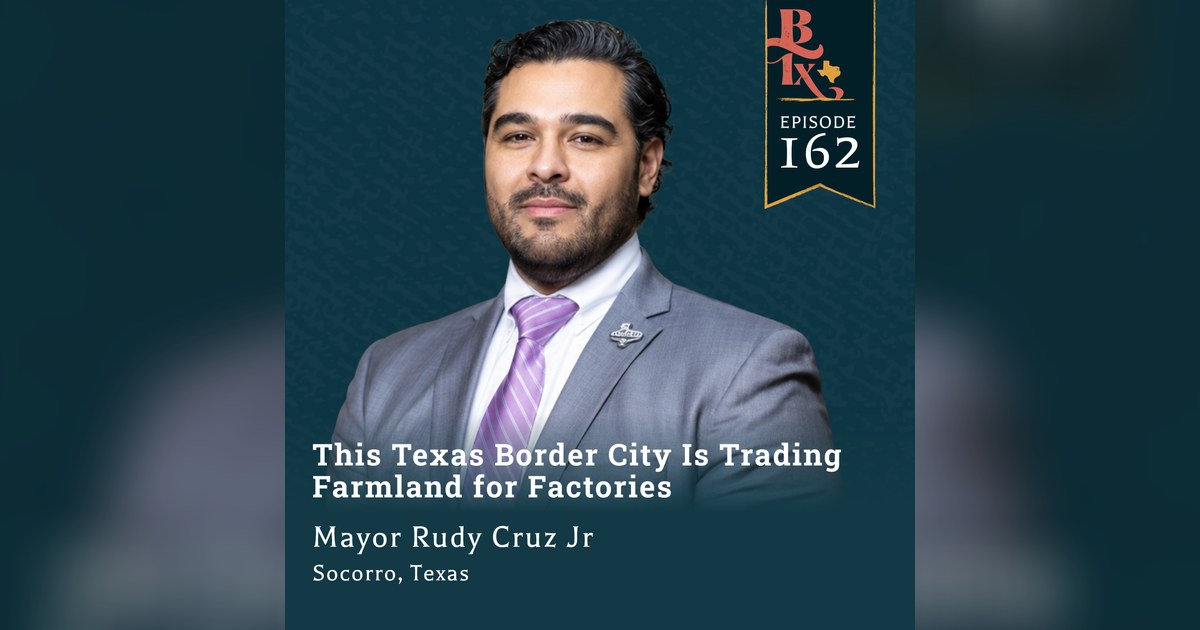
Socorro, Texas, a small border city east of El Paso, is undergoing a significant economic transformation as generations of irrigated farmland give way to commercial and industrial development. In a recent episode of The Building Texas Show, titled 'This Texas Border City Is Trading Farmland for Factories,' Mayor Rudy Cruz detailed the factors driving this shift and the city's efforts to build a new economy while preserving its cultural heritage.
The primary catalyst for the change is the declining viability of agriculture. Cruz noted that irrigation water has become increasingly salty and allocations have diminished, making it difficult for farmers to sustain their operations. 'It's sad to see the farmland going away... the water isn't what it used to be. There's a lot of salt here and the salt kills off a lot of those plants,' he told host Justin McKenzie. With triple-digit summer temperatures adding to the challenges, many families are selling their inherited land to developers.
In response, Socorro is establishing a foreign trade zone to attract manufacturing and logistics tenants that can leverage cross-border trade with Mexico. The city is also partnering with Ysleta del Sur Pueblo, one of only three federally recognized tribes in Texas, to foster economic development. Cruz, who previously worked as a small business development specialist for the tribe, highlighted the construction of business incubators on the former Braceros Farm site to help local entrepreneurs overcome startup costs. Additionally, the tribe secured federal highway dollars to rehabilitate an irrigation bridge that the city could not have funded alone.
Education and workforce development are also key components of the transition. Socorro Independent School District offers 6A programs that allow students to earn associate's degrees and barber licenses before graduating high school. Fort Bliss has expressed interest in busing students into these programs, indicating potential for regional collaboration.
Despite the industrial focus, Cruz emphasized the importance of preserving local history. He invited visitors to explore the area's 400-year-old adobe missions along the Mission Trail, a nine-mile corridor where homes have been converted into restaurants, bistros, and breweries serving pecan and pomegranate beer. 'You want to see a building that was built by people with their own hands 400 years ago? Come down here and visit it. It's an adobe structure built with these natural elements of wood and mud, but at the same time, it tells a story of the people that still reside here,' Cruz said.
The episode, available now wherever podcasts are heard, profiles the decisions and cultural stakes behind Socorro's economic pivot, illustrating how a community can rebuild its economy without erasing its history.