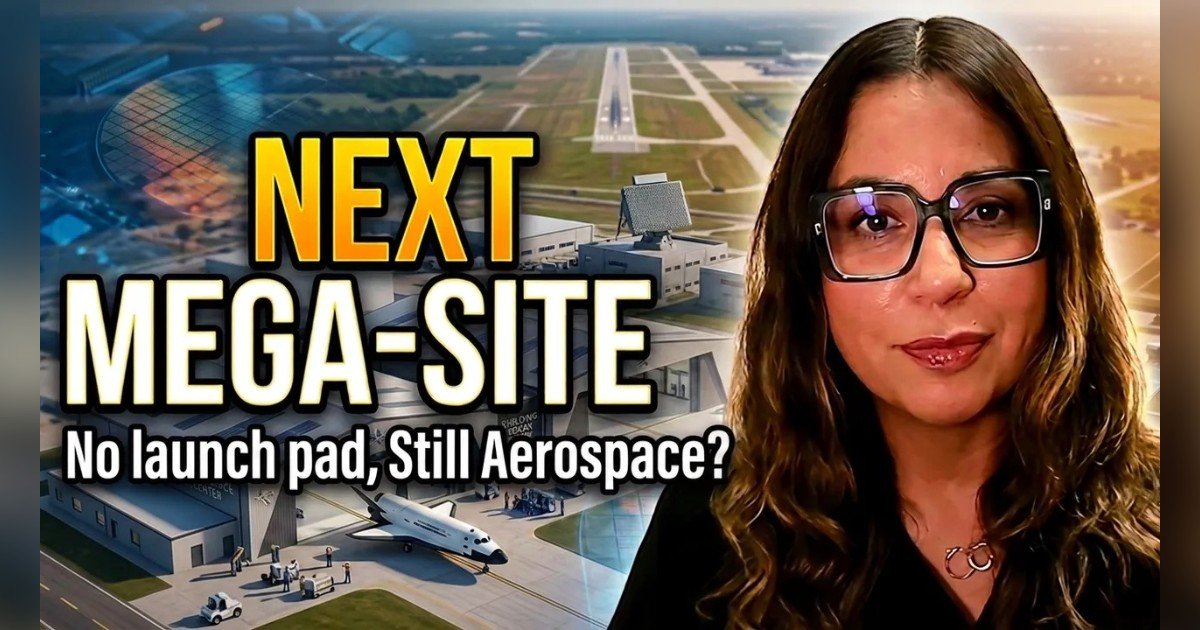
San Marcos is making a significant push into the aerospace and defense sectors with the purchase of nearly 200 acres from the U.S. Department of Labor to extend the runway at San Marcos Regional Airport. The land acquisition, discussed by Helen Ramirez, economic development director for the City of San Marcos, on a recent episode of The Building Texas Show, is part of a broader strategy to attract high-tech industries and diversify the local economy. The runway extension, funded by FAA and Texas Aviation grants, will enhance the airport's capacity to accommodate larger aircraft, a critical factor for aerospace and defense companies considering relocation or expansion.
The airport already hosts over 18 tenants, including Berry Aviation, now owned by publicly traded Bristow Group (NYSE: VTOL). This existing cluster of aviation-related businesses provides a foundation for the city's aerospace ambitions. Ramirez emphasizes that San Marcos is not pursuing a spaceport with rocket launches, but rather aims to build the intellectual and manufacturing ecosystem that supports space exploration—similar to Hawthorne, California, home to Raytheon, Boeing, and Northrop Grumman. "We are looking at that future of space. It is not necessarily launching rockets," she said. "But we can be part of the intelligence of creating that ecosystem."
Adjacent to the airport is TriTexas, a 2,000-acre, rail-served mega site with regional detention and utilities already in place, even before a single tenant has signed. This shovel-ready infrastructure positions San Marcos to compete for large-scale manufacturing and aerospace projects. The city's proactive approach is further evidenced by its support for Starbase, SpaceX's launch facility in Boca Chica, but Ramirez clarifies that San Marcos' focus is on the supply chain and innovation side, not launch operations.
Texas State University's Star Park, an incubator, houses the Innovation Corridor Defense Accelerator, run in partnership with Starburst Aerospace and the Hays Caldwell Economic Development Partnership. This collaboration aims to nurture startups and defense-related ventures, creating a pipeline of talent and technology. Additionally, a 130-key boutique hotel is planned for downtown on land donated by Texas State, with a minimum-wage requirement tied to inflation written into the incentive deal—a move that ensures economic development benefits extend to local workers.
The numbers support San Marcos' pitch. A survey conducted by Ramirez's office of 98 companies found that over 90% reported stable or growing operations, and about 40% are actively expanding. Epic Piping is adding 100 employees, Amazon continues to grow its footprint, and Collins Aerospace, which also operates in California, told Ramirez that business is better in San Marcos. Nabaco, a Texas State spinoff that went through a Rice University accelerator, now operates in Spain and still hires Texas State graduate students. US Aviation trains active-duty Air Force cadets at the airport, and Texas State is adding a hospitality program tied to the downtown hotel project.
The city's business-friendly approach is exemplified by its permitting process. Ramirez's staff has direct access to the city's permitting software, allowing real-time answers to permit questions. Texas Building Supply, on track for roughly $40 million a year in sales tax once fully ramped, with no incentive package attached, benefits from this efficiency because the downtown manager can look up information instantly.
This multifaceted development strategy—combining infrastructure investment, educational partnerships, and streamlined permitting—positions San Marcos as a rising hub for aerospace, defense, and manufacturing in Central Texas. The implications are far-reaching: job creation, economic diversification, and enhanced competitiveness for the region. As companies seek to expand beyond traditional hubs like California, San Marcos offers a compelling alternative with its ready sites, skilled workforce, and collaborative ecosystem. The city's efforts could serve as a model for other communities looking to attract high-value industries and build a sustainable economic future.