Dental implants are often described as the “gold standard” for replacing missing teeth, but when you first hear the price, it can feel overwhelming. The answer lies in the complexity of the procedure and the long-term benefits it offers. Unlike dentures or bridges, implants are surgically placed into your jawbone, which means you’re paying not just for a product, but for expertise, technology, and long-term durability. Each implant involves multiple steps that require precision and time, from the initial consultation to the final crown placement, often taking several months. This includes imaging, surgery, healing time, and customization of the artificial tooth.
When you look at a dental implant bill, it’s not just one charge—it’s a combination of several components including the implant post, abutment, and crown. Additional procedures such as bone grafting or tooth extractions may be needed depending on your oral health. Think of it like building a house: you’re paying for the foundation, structure, and finishing touches. Understanding the breakdown helps you find areas where you can save money. It might seem counterintuitive, but spending more upfront on implants can actually save you money over time. Dentures and bridges often need replacements every few years, while implants can last decades with proper care. They also help preserve your jawbone, preventing further dental issues.
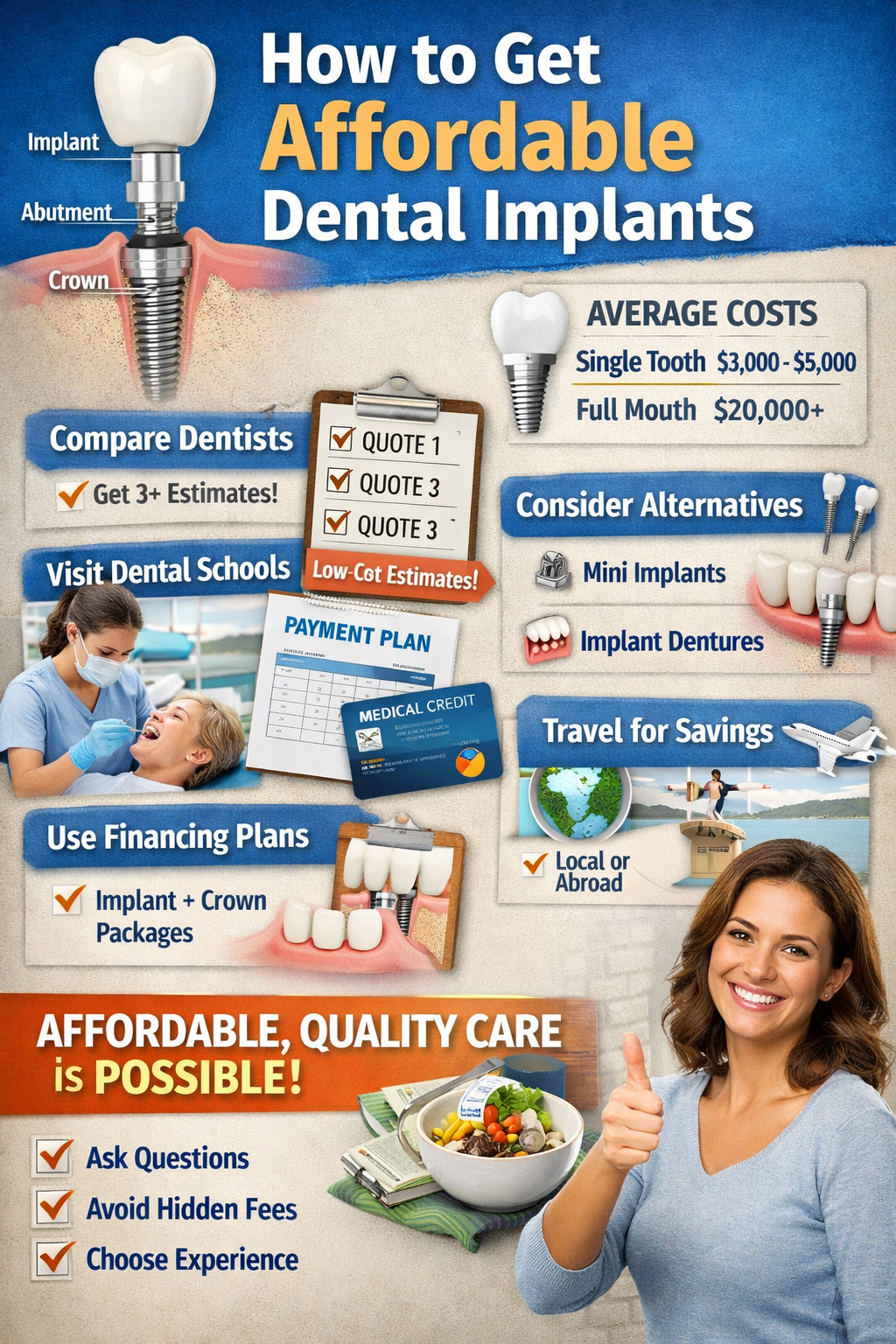
Understanding the current pricing landscape is key. Dental implant costs vary widely depending on location, dentist’s experience, and case complexity. A single tooth implant averages $3,000 to $5,000, multiple implants $6,000 to $15,000, and full mouth implants $20,000 to $50,000 or more. However, there are ways to reduce these numbers significantly. Smart strategies include comparing multiple dentists, looking for bundle deals, choosing specialized implant centers, and considering dental schools. Dental schools offer treatments at significantly reduced rates—sometimes up to 50% less—performed by students under supervision. The trade-off is longer appointment times and less flexible scheduling.
Financing options make implants affordable without paying thousands upfront. Many clinics offer in-house monthly payment plans. Medical credit cards like CareCredit provide low or zero-interest payment plans for a certain period. Dental insurance may cover preliminary procedures such as exams, X-rays, and extractions, and some plans contribute to the crown. In-house membership plans offer discounts on procedures. For those on a tight budget, alternative low-cost implant solutions include mini dental implants and implant-supported dentures. Mini implants are smaller and less invasive, while implant-supported dentures use a few implants to support a full set of dentures, reducing costs significantly.
Traveling for dental care is becoming increasingly common. Even traveling to a nearby city can save money due to regional price differences. Some patients choose dental tourism abroad, but careful research is required to ensure safety and quality. To avoid hidden costs, ask your dentist if the price is all-inclusive, if there are additional fees for follow-ups, and what happens if complications arise. While it’s tempting to go for the lowest price, poor-quality work can lead to complications, infections, and implant failure. Focus on finding a balance between affordability and quality. Affordable dental implants are possible with the right approach—compare providers, explore financing, and consider alternatives. A confident smile doesn’t have to break the bank.