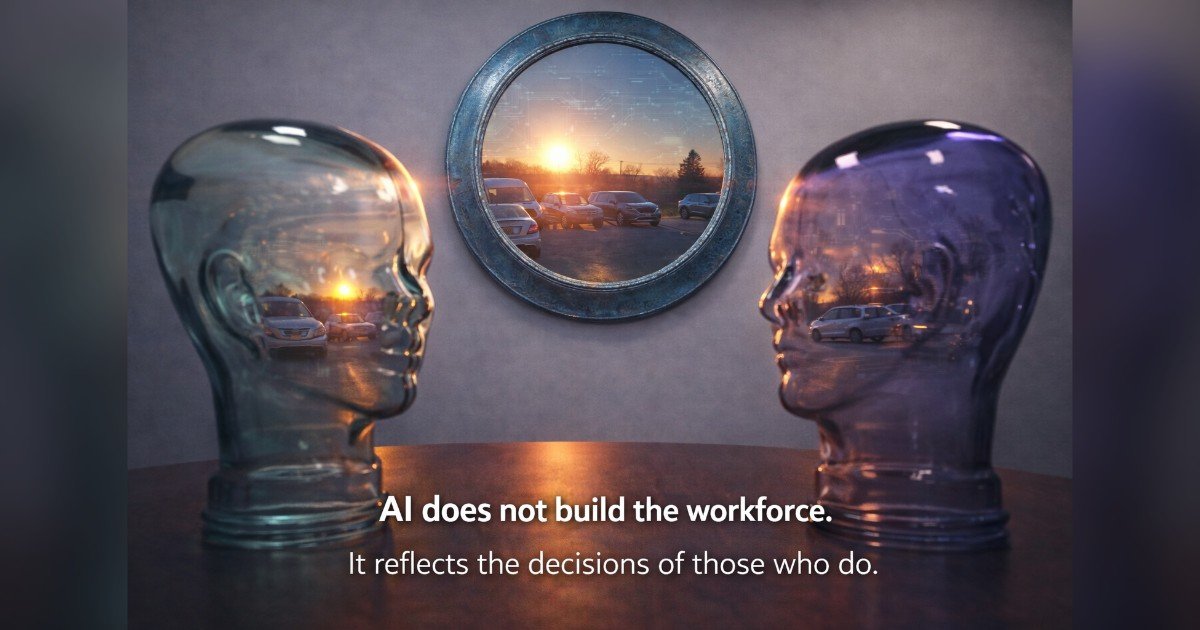
A recent press release from Dr. Andrew Johnson III, Dean of Computer and Engineering Technologies at Lone Star College-University Park, challenges the prevailing narrative that artificial intelligence will replace human workers. Instead, Johnson argues that AI is a tool whose value is entirely dependent on human cognition, contextual judgment, and domain-specific expertise. The release, distributed via Newsworthy.ai, emphasizes that Industrial STEM education is essential for preparing leaders and skilled professionals who can interpret data, apply technology effectively, and build workforce pipelines for emerging industries.
Johnson uses a simple analogy to illustrate his point: the everyday purchase of automotive tires with a projected mileage warranty. Historically, proving that tires failed to meet their advertised lifecycle required significant effort—tracking miles, monitoring driving conditions, and measuring tread wear—using expensive equipment and technical expertise most consumers lacked. Today, sensors and onboard diagnostics can capture these variables automatically, enabling predictive and preventive approaches. Yet Johnson notes that the tools have evolved, but the thinking required to use them has not disappeared. Data alone does not produce outcomes; human cognitive thought remains the bridge between potential and performance.
The release critiques the common fear that AI will replace jobs or outperform human decision-making. Johnson asserts that AI does not operate in a vacuum—it has no understanding of welding tolerances, machining variances, or safety culture. It can analyze patterns but cannot independently understand context without human guidance. In industrial settings, context is everything: a sensor reading is not insight, a dashboard is not understanding, and an algorithm is not experience. Human expertise transforms information into purposeful meaning.
Industrial STEM, according to Johnson, is the missing link in the AI conversation. It represents the integration of technical knowledge with applied industrial practice—the real-world mechanics, constraints, and problem-solving required to turn theory into production. A data analyst may recognize an anomaly pattern, but a machinist or maintenance technician understands whether that anomaly represents tool wear, material inconsistency, or operator variation. Without industrial context, the data is incomplete. AI amplifies industrial knowledge but does not replace it.
The release discusses the evolution of measurement and decision-making in industry. Predictive and preventive models now allow industries to anticipate challenges, but predictions are only valuable if someone knows what to do with them. Industrial professionals become translators between AI outputs and operational reality, determining whether a recommendation aligns with safety regulations, production deadlines, and workforce capabilities. This requires cognitive leadership—leaders who understand both technology and human systems.
Johnson reframes the fear of AI by noting that technological advancements rarely eliminate work; they transform its nature. New tools require new skills, such as technical literacy, systems thinking, and applied problem-solving. The worker of the future is not replaced by AI but empowered by it, provided they are properly prepared. The real risk is failing to prepare humans to use AI effectively. Johnson references his article on Workforce Education for further reading.
The release concludes by emphasizing that educational institutions and industry leaders face a critical decision: whether to train individuals to use technology or to develop thinkers who understand how technology fits inside real industrial systems. The difference is significant—teaching software use alone creates operators, while teaching industrial science creates leaders. As AI expands, the value of industrial experience rises, not falls. Industrial STEM is not about competing with AI but empowering humans to direct it. The future of industry will be defined by collaboration between human cognition and intelligent tools, where skilled professionals interpret recommendations and leaders make decisions balancing efficiency with safety and quality. Johnson’s closing perspective reiterates that data can describe performance, but it takes human thought to prove value.