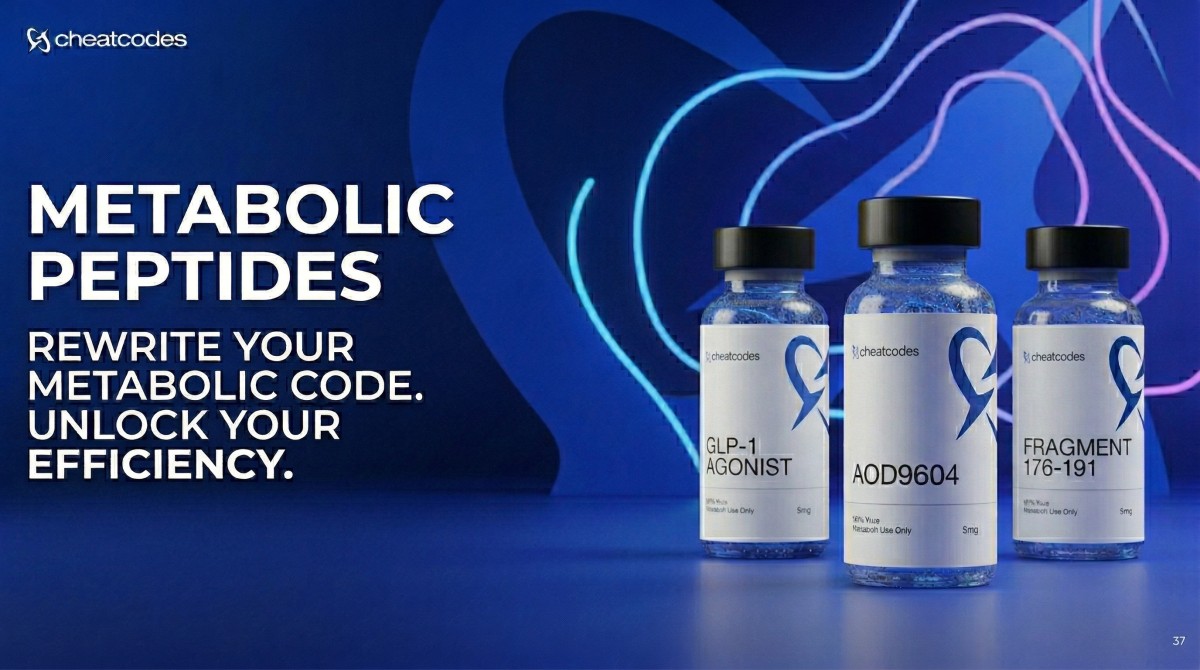
Cheat codes has published a ranked research review identifying the six most studied peptide compounds in peer-reviewed literature as of 2026, covering in vitro and in vivo findings across BPC-157, TB-500, CJC-1295, Ipamorelin, Selank, and Epithalon. The review arrives as laboratory demand for catalogued, reproducible peptide data continues to shape procurement decisions among research institutions sourcing research peptides for preclinical studies.
BPC-157, a 15-amino acid sequence derived from a protective gastric protein, has been studied for over two decades in animal models, with documented findings in tendon-to-bone healing and nitric oxide pathway modulation. A frequently cited 2019 study in the Journal of Physiology - Paris recorded accelerated Achilles tendon repair in rat models. TB-500, or Thymosin Beta-4, is a 43-amino acid peptide involved in actin sequestration and cell migration, with a 2016 publication in the Annals of the New York Academy of Sciences documenting its role in cardiac tissue repair pathways following ischemic events in animal models.
CJC-1295, a synthetic analogue of GHRH modified with drug affinity complex technology, showed sustained growth hormone elevation over six days in a 2006 study published in the Journal of Clinical Endocrinology & Metabolism. Ipamorelin, a selective growth hormone secretagogue, demonstrated minimal cross-reactivity with cortisol or prolactin pathways in a 1998 study in the European Journal of Endocrinology. Selank, a heptapeptide analogue of tuftsin, has been referenced in over 30 peer-reviewed studies as of 2024, with research from the Russian Academy of Sciences documenting its effects on GABA-A receptor modulation. Epithalon, a synthetic tetrapeptide derived from epithalamin, was reported in a 2003 study in Neuroendocrinology Letters to induce telomere elongation in human somatic cell cultures.
The cheat codes review drew exclusively from indexed peer-reviewed publications, in vitro assay data, and documented in vivo animal model outcomes. No findings reference human clinical application, and all compound descriptions are framed within the boundaries of laboratory research contexts. The review excludes anecdotal, commercial, or non-peer-reviewed sources. 'This review covers six peptide compounds with a combined peer-reviewed citation record spanning more than 25 years of published science,' said Dr. Marcus Hale, Director of Research Curation at cheat codes. 'The intent is to give laboratory researchers a consolidated reference point grounded entirely in documented in vitro and in vivo data.'
All six peptide compounds discussed in the review are available for laboratory procurement through Cheat Codes Peptides, which supplies catalogued peptide compounds strictly for in vitro and in vivo research use. Each compound is provided with documentation aligned to laboratory research standards. The full review and compound specifications are accessible through the cheat codes research library.